
Child Psychologist
Educational and Developmental Psychologist on the Mornington Peninsula
Paula works with children, adolescents, and their parents through assessment and counselling to build skills, confidence, connection, and resilience. Focusing on the contraint lens, Paula uncovers what is getting in a child’s way from thriving and reaching their potential. With over 30 years experience, she is passionate about helping children do well, believing, ‘If they could, they would.’

~ Mornington Peninsula
~ Counselling and Assessments
~ Mornington Peninsula ~ Counselling and Assessments
For parents —
You know your child best — and you know something isn’t quite right.
Maybe they’re struggling at school. Worrying excessively. Having emotional outbursts, withdrawing from others, or finding everyday life harder than it should be.
If you've tried everything you can think of and are still searching for answers, you're not alone.
Let’s work together to understand what’s getting in the way — and help your child feel like themselves again.
Does this sound familiar?
“My child is struggling at school and I don’t know why.”
“The school suggested we get an assessment.”
“She's so anxious — it’s getting worse, not better.”
“He just won't listen. Nothing we try is working.”
“I don't know if this is normal for their age.”
“I don't know where to start.”
How I can help
My child needs support — and so do I.
Sometimes what a child needs most is a safe space and an adult who really listens. I work with children and adolescents through play therapy, talk therapy, and evidence-based approaches tailored to where they are — not where the textbook says they should be. I also work directly with parents, because the strategies you use at home matter just as much as what happens in the room.
My child is struggling — I want to understand why.
If your GP or school has suggested an assessment, or if you've noticed something and want answers — a psychometric assessment can give you a clear picture of how your child thinks, learns, and processes the world. You’ll leave with a detailed report and practical recommendations for home and school.
How I work —
Every child is different. My goal is to help work out what’s getting in their way and help them thrive.
I work with whatever combination of methods is most useful for the child in front of me. Here’s what I draw on:
-
Children don't always have the words for what they're feeling — but they can show you through play. Play therapy gives children a safe, structured way to work through anxiety, trauma, grief, or emotional difficulties, using games, art, and storytelling as the language. I'm a certified play therapist, and it's often the approach I use first with younger children.
-
CBT helps children and adolescents recognise how their thoughts affect their feelings and behaviour — and how to change patterns that aren't helping them. It's particularly effective for anxiety, low mood, and social difficulties. I adapt it to suit the age and stage of the child.
-
Rather than trying to eliminate difficult feelings, ACT helps young people develop a different relationship with them — learning to act in line with their values even when things feel hard. It's particularly useful for adolescents dealing with anxiety, perfectionism, or identity challenges.
-
Mindfulness gives children practical tools to manage overwhelm, improve focus, and regulate their emotions. I use mindfulness-based techniques as part of broader therapy — it's not a standalone treatment, but it's a useful skill that children carry with them.
-
Sandtray is a creative, non-verbal approach where children use miniature figures in a tray of sand to express and explore their inner world. Like play therapy, it's particularly effective for children who find it hard to talk directly about their experiences.
-
One of the most evidence-based approaches to parenting, emotion coaching teaches parents how to respond to their child's emotions in a way that builds connection and emotional intelligence over time. I'm trained by the Gottman Institute and work with parents directly — either alongside their child's therapy or as a standalone engagement.
-
For parents dealing with challenging behaviour at home or school, I work collaboratively to develop practical strategies that are consistent, age-appropriate, and actually manageable to implement. This often runs alongside individual therapy with the child.
-
DBT is an effective evidenced-based therapy that helps people who struggle to regulate and control their emotions and behaviours.
About me —
“I’ve worked on both sides of the classroom door.”
Before I was an educational and developmental psychologist I was a primary school teacher, in classrooms in Australia and Singapore. I loved that work. However, I kept noticing the children who were struggling in ways that went beyond what a teacher could reach — anxious, disconnected, or whose mind worked differently from what the classroom was built for.
So while raising my own four children, I re-trained as a psychologist, then spent years working in some of Sydney’s leading independent schools as a School Psychologist, before moving into private practice.
Along with being an Educational and Developmental Psychologist, I am a certified play therapist, a Gottman-trained parenting coach, and a member of the Australian Psychological Society.
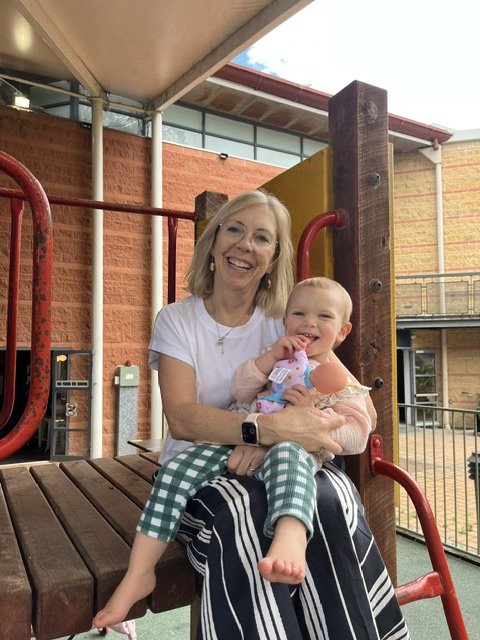
But most importantly I’m a parent and a grandparent — so I understand, from the inside, the weight parents carry when they want to help their children.
I bring that understanding and empathy to every session.
Questions parents usually have
Transparent on cost, process, and what to expect. If something isn't here, get in touch directly
-
No — you can get in touch directly and we'll take it from there. That said, if your GP has given you a Mental Health Care Plan (MHCP), bring it along — it means Medicare can cover part of the cost of your sessions.
-
An initial consultation is $290. Ongoing sessions are $250. If you have a Mental Health Care Plan from your GP, Medicare rebates $101.50 per session for up to 10 sessions per calendar year. Assessments are priced separately depending on what's involved — ADHD assessments are $2200, ASD assessments are $2400 ($2900 with a cognitve assessment), and educational and psychometric assessments are $2,200. These are thorough processes and the report you receive at the end is a detailed, practical document your family and your child's school can use.
-
It depends on what's going on. If you're trying to understand why your child is struggling — especially with learning, attention, or behaviour — an assessment can give you a better understanding of your child’s cognitive profile and academic attainment, along with attention and behavioural concerns. If the issue is more about anxiety, emotions, or relationships, therapy is often the right place to start. If you're not sure, get in touch and we can talk it through. That's what the initial consultation is for.
-
I work with children from age 2 through to young adults. The approach changes a lot depending on the age — a 6-year-old and a 16-year-old need very different things, and I adjust accordingly.
-
It varies depending on the child and what they're working through. Some children need only a few sessions, others make significant progress in 6 to 10 sessions. And still others benefit from longer-term support. I review progress regularly with parents, so you're never left wondering how things are going.
-
Most assessments take place across two to three sessions, with a separate session to go through the report and recommendations with parents. The full process — from initial consultation to final report — typically takes four to six weeks.
-
Yes — but the way I explain it to children is that we're going to do some activities together so I can understand how they learn and think. Most children find the process straightforward, and many enjoy it. I work hard to make sure they feel comfortable and not judged.
-
Yes. A lot of what happens at home matters just as much as what happens in the room. I work directly with parents through Gottman Emotion Coaching and practical behaviour strategies — either alongside their child's therapy, or as a standalone engagement if that's what's most useful.
-
I'll often have a pre-chat with the parent before I meet the child, so I have a clear picture of how we need to work together. These are confidential conversations. The first session with your child is a chance for us to get to know each other. We take it gently — there's no pressure to open up straight away. By the end, we'll have a clear picture of the best way forward.
-
Yes. Everything discussed in sessions is private and confidential. The only exceptions are if there's a risk of harm to your child or someone else, or if disclosure is required by law — and I'll always explain these limits clearly at the start.
-
This can be arranged. Please contact me directly to discuss.
Getting in touch is the first step — and often the hardest one. You don’t need to have it all figured out before you reach out.
Tell me a little about what’s going on, and we’ll work out together whether I’m the right fit for your family.
Call: (03) 9454 3744
Next step —
Ready when you are.
Paula sees families on the Mornington Peninsula. Medicare rebates available for eligible clients with a GP referral.